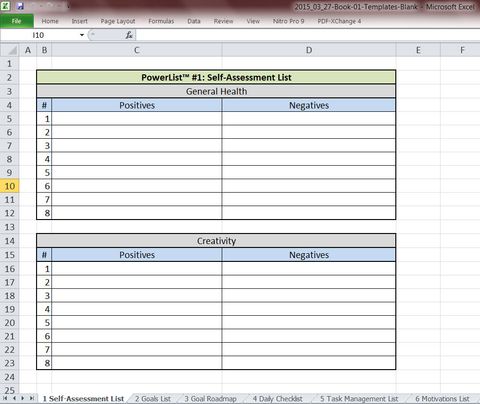
Goals are reached more often when you decide in advance when and where you will act, track your progress, and record it where you can see it. Two large reviews of the research point the same way. Below are five steps built on them, written as a short list you can use today.
What does the research say about reaching goals?
A 2016 meta-analysis in Psychological Bulletin by Benjamin Harkin and colleagues pooled 138 randomized studies with 19,951 participants. Interventions that got people to monitor their progress improved goal attainment (d+ = 0.40, a small-to-moderate effect), and the effect was larger when results were reported or made public. It was also larger when the information was physically recorded (PubMed, Psychological Bulletin 2016;142(2):198-229).
A second review, by Peter Gollwitzer and Paschal Sheeran in 2006, looked at “implementation intentions”: plans in the form “if situation Y arises, I will do behavior X.” Across 94 independent tests they had a medium-to-large positive effect on goal attainment (d = .65). The authors start from the point that strong goal intentions don’t guarantee success, because people often struggle to carry them out (Gollwitzer and Sheeran, 2006, Advances in Experimental Social Psychology).
Why does an if-then plan help?
Gollwitzer and Sheeran report that these plans helped people start acting on goals, shield ongoing efforts from distractions and disengage from strategies that were failing. They also found support for two mechanisms: forming the plan made the chosen moment easier to notice, and it made the linked response more automatic. In plain terms, you decide once, ahead of time, so you do not have to decide again when you are tired or busy.
That is also why a vague wish fails. “Get fit” gives you nothing to notice. “After I put on my work shoes at 6:30, I walk for 15 minutes” gives you a moment and an action.
Why does recording and sharing progress help?
Harkin’s team describes progress monitoring as a step between setting a goal and reaching it. Interventions increased how often people checked their progress, and the checking itself partly explained the better results. Seeing where you stand lets you correct course early. Writing it down means you cannot quietly forget what you did last week, and telling someone adds a small reason to keep going.
What are the 5 steps?
- Write the goal down in one sentence that you could check. “Write 500 words” can be checked. “Write more” cannot. This is my advice, not a finding of those reviews.
- Make an if-then plan. “If it is 7 a.m. and I have poured coffee, then I will write for 20 minutes.” This is the format Gollwitzer and Sheeran studied.
- Track every day. A paper calendar or a spreadsheet is fine. Harkin’s review found physically recorded progress worked better.
- Tell someone, or post it. Reported or public progress worked better in the same review. I wrote about how in #1 Method For Reaching Goals? Make Your Progress Public.
- Check once a week and adjust the plan, not the goal, if you keep missing. A missed plan usually points to the wrong time or cue, so change that first.
Do these steps work for every goal?
No. The effects above are averages. Harkin’s is small to moderate, and I would not promise anyone a result. What the reviews support is narrower: a plan and a record give you better odds than good intentions alone.
Making a New Year’s resolution? Why Do New Year’s Resolutions Fail? covers the research on how to word it.
Wondering about SMART goals? Do SMART Goals Work? covers what the research says.
If a goal keeps stalling, the cause may be a habit that works against it. What’s the Big Deal With Habits? shows how to find it, and How Long Does It Take to Form a Habit? shows what to expect while you change it.
If your goal lists keep getting ignored, read Why Do I Make Plans and Goal Lists and Then Ignore Them?.
Feeling that your whole life is behind? Read how to get your life together and where to start.
Want more?
Achieve Your Goals Now With PowerLists

Get the free PowerList Excel templates
Frequently asked questions
What does research say about reaching goals?
A review of 138 randomized studies found that monitoring progress improved goal attainment, more so when it was recorded or made public. Another review found if-then plans had a medium-to-large effect.
What is an if-then plan?
A plan in the form: if situation Y arises, I will do behavior X. For example: if it is 7 a.m. and I have poured coffee, then I will write for 20 minutes.
Why does recording and sharing progress help?
Checking your progress lets you correct course early, writing it down means you cannot quietly forget, and telling someone adds a small reason to keep going.
Do these steps work for every goal?
No. The effects are averages, and I would not promise anyone a result. A plan and a record give you better odds than good intentions alone.