Start with one area and one small step, not a full reset. “Get my life together” is too big to act on, so it keeps you stuck. Pick the one thing that, if it improved, would make the rest easier, and make a small plan for it this week. Below: how to choose, what the research says, a word for anyone who feels it is too late, and when to talk to a doctor instead. The steps are my advice, built on that research.
Where do I start when everything feels behind?
My advice: do not start with a list of everything. Write down the areas that feel off, such as money, health, work, home, people. Then pick one. The test I use: which one, if it got a bit better, would make the others easier?
Then turn it into one goal with one first step. Our post on how to set goals you actually reach walks through the setting.
Why does a plan help more than good intentions?
Dr Pippa Lally of the University of Surrey says that if you make a clear plan of when and where you will do something, you are more likely to do it than if you have a vague intention (University of Surrey, 21-Jan-26). “Get fitter” is a vague intention. “Walk for ten minutes after breakfast” is a plan.
Plans fail when they ask for too much, and many resets fail for the same reason. That is why New Year’s resolutions tend to fail: they try to change everything at once.
How long until it feels normal?
Longer than most people hope, and it varies. In a study on habit formation, the average time to reach a plateau of automatic behaviour was 66 days. Individuals ranged from 18 to 254 days, and simpler actions became automatic faster. The authors suggest telling people to expect about 10 weeks (British Journal of General Practice, Dec 2012). Missing an occasional day did not seriously derail progress. Lally herself says the time is highly variable.
So if week three feels slow, that is normal.
What if it feels too late at 26, 30 or 35?
The research above is about how habits form, not about how old you are, and none of it names an age after which change stops working. My advice: the method is the same at any age: one goal, a small action, a steady cue, and patience.
A feeling of being behind usually comes from comparing your chapter one to someone else’s chapter ten. Compare yourself with three months ago instead.
What are five steps to start this week?
These are my advice. The studies above do not test them as a set.
- Pick one area. Not three.
- Write one goal in a sentence. “Sleep before midnight on weekdays.”
- Choose one action you can do in ten minutes. “Phone off and in the kitchen at 10:30.”
- Tie it to a time and place. After you brush your teeth, for example.
- Review on Sunday. Count the days you did it. Adjust one thing. Keep going.
When should I talk to a doctor?
Feeling stuck is common. But if it comes with low mood that does not lift, hopelessness, or thoughts of harming yourself, please talk to a doctor. This is not something to fix with a better plan. The NHS says that if you think you may be depressed, you should not delay, because the sooner you see a doctor, the sooner you can be on the way to recovery (NHS, depression in adults, last reviewed 5-Jul-23). More help is on the NHS mental health page.
In the US, you can call or text 988 to reach the 988 Suicide & Crisis Lifeline. It is free and confidential, open every day at any hour. If you are in immediate danger, call your local emergency number.
What next?
Pick one area and write one sentence about it. Then put a ten-minute action in your calendar for tomorrow.
Want more?
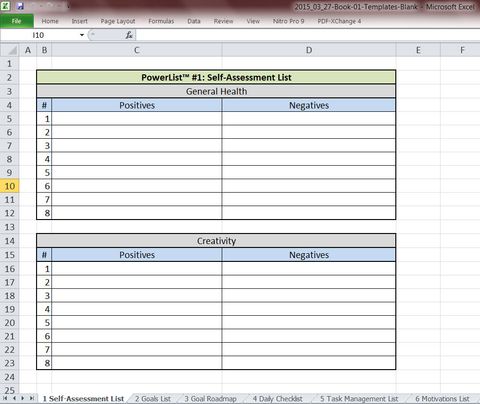
Achieve Your Goals Now With PowerLists

Get the free PowerList Excel templates
Frequently asked questions
Where do I start when everything feels behind?
Start with one area and one small step. Write down the areas that feel off, then pick the one that, if it got a bit better, would make the others easier.
Why does a plan help more than good intentions?
Dr Pippa Lally of the University of Surrey says that a clear plan of when and where you will do something makes you more likely to do it than a vague intention.
How long until a change feels normal?
In one habit study the average time to reach a plateau of automatic behaviour was 66 days, with individuals ranging from 18 to 254. The authors suggest expecting about 10 weeks.
Is it too late to get my life together at 30 or 35?
None of the research names an age after which change stops working. My advice is that the method is the same at any age: one goal, a small action, a steady cue and patience.
When should I talk to a doctor?
If feeling stuck comes with low mood that does not lift, hopelessness or thoughts of harming yourself, talk to a doctor. The NHS says the sooner you see one, the sooner you can be on the way to recovery.