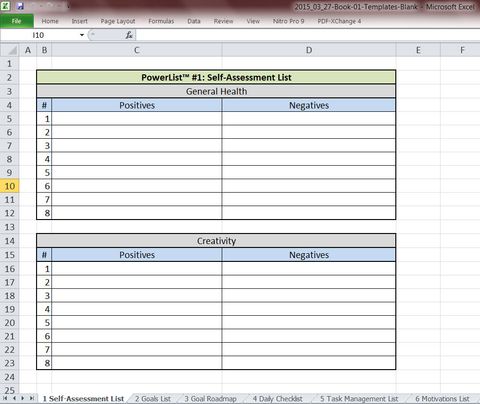
Most goal lists get ignored because they say what you want but not when and where you will act. A wish needs a cue, a first step small enough to start, and a place in your week. Below: what the research says about planning, where it has limits, and five steps to try. The five steps are my advice, built on that research.
Why does a goal list not turn into action?
My reading: a list feels like progress. Writing it gives a small lift, and the lift can stand in for the work. What the research adds is that a vague intention is weak. Dr Pippa Lally of the University of Surrey says that if you make a clear plan of when and where you will do something, you are more likely to do it than if you have a vague intention (University of Surrey, 21-Jan-26). She also says that knowledge alone does not lead to behaviour change. Knowing what to do is not the missing piece.
What do if-then plans do?
An if-then plan, sometimes called an implementation intention, links a situation to a response: “If it is 7:30 and I have my coffee, then I open the draft.” A 2025 meta-analysis pooled 642 tests of this kind of planning. It found positive effects on thinking, feelings and behaviour, with effect sizes from d = .27 to d = .66. Effects were larger when the plan had the if-then format, when people were highly motivated, and when the plan was rehearsed (European Review of Social Psychology, 2025).
Two cautions follow from that. First, plans work better when you care about the goal, so a plan for something you do not want will not rescue it. Second, the study pools many kinds of tests, so the numbers are a guide, not a promise for your own project.
Why do plans fail after a few days?
Most plans ask for a new habit, and habits take longer than people expect. In Lally’s study, 96 students signed up to repeat a new behaviour daily for 84 days, and 82 finished. The average time to peak automaticity was 66 days, with a range of 18 to a predicted 254 days, and roughly half had not reached habit status by day 84 (BPS Research Digest, 6-Oct-10). A single missed day had little effect. Many missed days lowered the level reached. The study used self-reports, which the researchers accept is a weakness.
So if your plan fell apart in week two, that is normal. It is not a verdict on you.
What are five steps to turn a list into a plan?
These are my advice. The studies above do not test them as a set.
- Cut the list to one goal. Ten goals means ten half-plans. If you cannot choose, our post on too many goals helps.
- Write the first step as an if-then. “If it is Monday at 9:00 and I sit down, then I write the outline.” A time and a place, not a mood.
- Make the first step small. Two minutes counts. Starting is the hard part.
- Say the plan out loud, or write it where you will see it. Rehearsal was one of the things linked to larger effects.
- Tell someone. Our post on making your progress public covers this idea, and how to set goals you actually reach goes deeper on the setting.
After a miss, just do the next planned step. One miss is not a failure.
What does a good first week look like?
This is my advice, not a study result. In week one, do not try to prove anything. Pick the one goal, write the if-then plan, and do the two-minute step on as many days as you can. At the end of the week, look at the calendar and ask one question: what got in the way on the days I skipped? Maybe the time was wrong, the place was wrong, or the step was still too big. Change that one thing and keep going. A plan is a draft you improve, and the second version is nearly always better than the first.
What next?
Pick the one goal and write one if-then plan today. If you have already tried and keep slipping, read Why Do I Start Strong and Quit After a Week?.
Want more?
Achieve Your Goals Now With PowerLists

Get the free PowerList Excel templates
Frequently asked questions
Why do I make plans and not follow them?
Most goal lists say what you want but not when and where you will act. A vague intention is weaker than a clear plan of when and where.
What is an if-then plan?
It links a situation to a response, such as: If it is 7:30 and I have my coffee, then I open the draft. A 2025 meta-analysis of 642 tests found positive effects on thinking, feelings and behaviour.
Why do plans fail after a few days?
Most plans ask for a new habit, and habits take longer than people expect. In Lally's study the average time to peak automaticity was 66 days, with a range of 18 to a predicted 254.
Is missing a day the end of the plan?
No. In that study, a single missed day had little effect. After a miss, just do the next planned step.