You stop procrastinating by making the first step small enough that it no longer feels bad to start. That is my advice, and it rests on a fairly consistent finding: procrastination is mostly about how a task makes you feel, not about how well you manage your time. Below is what the research says, where it is mixed, and five steps to try today.
Why do I put things off when I know it hurts me?
Two researchers, Fuschia Sirois and Timothy Pychyl, argue that procrastination “has a great deal to do with short-term mood repair and emotion regulation.” In plain words: a task feels boring, scary or confusing, so you do something else, and you feel better for a while. The cost lands on your future self (Social and Personality Psychology Compass, 1-Feb-13).
That fits how it feels from the inside. The relief is real, and so is the guilt that arrives later. The loop feeds itself, because the guilt is one more bad feeling to get away from.
Is it only about feelings?
No, and this is where the research is mixed. A 2018 survey of 638 adults in Frontiers in Psychology tested impulsivity, motivation and emotion regulation together. The model explained 70% of the variance in procrastination. The strongest direct links were lack of perseverance, a habit of favouring small rewards now over larger ones later, and not valuing the task. Suppressing emotions did have a link, but the authors called its weight “surprisingly low.” The link was clear for students and not for non-students (Frontiers in Psychology, 5-Jun-18).
The authors list limits. It was a one-time online questionnaire, so it shows patterns, not causes. Their emotion measure covered only two strategies. They also warn against assuming results from students apply to everyone.
So a fair summary: feelings matter, but so does whether you care about the task and how easily you are pulled to something else. Anyone who tells you there is one cause is selling something.
How is this different from procrastinating on purpose?
I wrote about delaying a task deliberately, after deciding it is not worth doing now, in Is Procrastination a Virtue?. That is a choice. This post is about the other kind, where you did not choose, you just avoided the task and felt worse. If you decided to wait, you are fine. If you are hiding from it, read on.
What are five steps to stop procrastinating?
These are my advice. The research above does not test them as a set.
- Name the feeling. Before you open another tab, ask what the task makes you feel: bored, afraid of doing it badly, unsure where to start? One word is enough. Avoidance is easier to spot once you have a name for it.
- Shrink the first step. Not “write the report.” Open the document and write the title. If two minutes sounds doable, that is the size to aim for.
- Pick a when and where. “At 9:00, at my desk, I open the file.” A clear plan of when and where is something habit researchers recommend over a vague intention. I covered that research in Discipline or Motivation?.
- Remove one easy escape. Phone in another room, one tab only. You are not testing your willpower. You are making the pull of the other thing a little smaller.
- Stop at the end of the small step if you want to. Often you keep going. If not, you still started, and you can try again at the same time tomorrow.
If you slip, restart at step two. For what to do when a new habit fades after a week, see Why Do I Start Strong and Quit After a Week?.
When is it more than procrastination?
Sometimes putting things off is a sign that something else is going on. If you feel low or hopeless for weeks, not just a few days, with constant tiredness, poor sleep or no interest in things you used to enjoy, talk to a doctor. The NHS says that if you think you may be depressed, it is best not to delay getting help (NHS, last reviewed 5-Jul-23). No list of steps replaces that.
What next?
Start with the smallest step of the task you are avoiding right now. Then read about how habits form in What’s the Big Deal With Habits?.
Want more?
Habit Ignition: 41 Steps to Unlocking the Secret Power of Habits and Rituals for Life

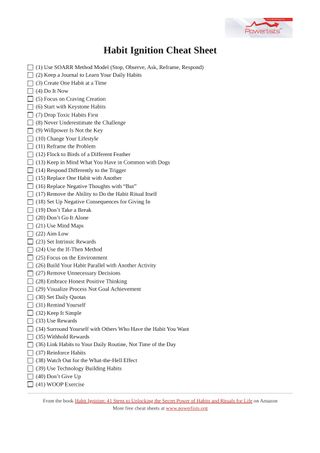
Get the free Habit Ignition cheat sheet
Frequently asked questions
Why do I put things off when I know it hurts me?
Sirois and Pychyl argue that procrastination has a great deal to do with short-term mood repair and emotion regulation. A task feels boring, scary or confusing, you do something else, and you feel better for a while.
Is procrastination only about feelings?
No. A 2018 survey of 638 adults found that lack of perseverance, favouring small rewards now and not valuing the task had the strongest direct links. The research is mixed.
How do I stop procrastinating?
Name the feeling, shrink the first step, pick a when and where, remove one easy escape, and stop at the end of the small step if you want to. These steps are my advice.
When is it more than procrastination?
If you feel low or hopeless for weeks, with constant tiredness, poor sleep or no interest in things you used to enjoy, talk to a doctor. The NHS says it is best not to delay getting help.