If you hate exercise or have no time, start with a version so small it feels almost pointless, tie it to something you already do every day, and build from there. Do not start with the full weekly target. This is general information, not medical advice. If you have a health condition, or you have not exercised for some time, speak to your doctor before you start. Below: what the official guidelines say, what habit research adds, and five steps. The steps are my advice.
How much exercise do adults actually need?
The CDC says adults need 150 minutes of moderate-intensity physical activity a week, and at least 2 days a week of muscle-strengthening activity. It gives 75 minutes of vigorous activity as an alternative to the moderate amount, and says a mix of both can count. The 150 minutes can be spread out, for example 30 minutes a day on 5 days (CDC, Adult Activity: An Overview, December 2023).
The NHS gives the same targets for adults aged 19 to 64. It suggests spreading activity across 4 to 5 days a week or every day, choosing activities that match your current fitness, and starting gradually if you have been inactive. Moderate effort means you can talk but not sing. It also says: “speak to your GP first” if you have not exercised for some time, or if you have a medical condition or concerns about exercising (NHS, last reviewed 22 May 2024).
Those numbers are a target, not an entry ticket. Nothing in them says you must hit 150 minutes in week one.
Why is it so hard to stick with?
Here I can only give my reading. Most people begin with a plan sized for their best day: five sessions, an hour each. The first bad week breaks it. Then the plan feels like failure, and failure is not a good reason to try again.
Habit research points the other way. In a study of 96 students building a daily habit, the average time to feel automatic was 66 days, with a range from 18 to 254. One missed day made little difference (BPS Research Digest, 6-Oct-10). The 2012 paper behind it found simple actions became automatic faster and that an occasional miss did not seriously harm habit formation (British Journal of General Practice, December 2012). Exercise is more demanding than drinking a glass of water, so expect it to sit toward the slower end. For the full picture, read How Long Does It Take to Form a Habit?.
What good does it do, to make the effort worth it?
The NHS lists a lower risk of heart disease, stroke, type 2 diabetes and some cancers, and better mood, sleep, energy and self-esteem, with less stress (NHS, last reviewed 15 August 2024). It also says that building activity into daily life, such as walking instead of driving short journeys, counts.
What are five steps to make exercise a habit?
These are my advice. The sources above do not test them as a set.
- Shrink it. Ten minutes of walking, or five minutes of movement at home. Pick something you can do in your normal clothes.
- Tie it to a cue. “After I make my morning coffee, I walk around the block.” A clear when and where beats “I’ll fit it in.”
- Choose the least-hated option. You do not need a gym. If you dislike running, walk. If you dislike walking alone, walk with a friend or a podcast.
- Plan for the missed day. Decide in advance that one miss is nothing and that you will do the small version the next day.
- Add time slowly. When the small version feels automatic, add a few minutes or one more day. Aim toward the official amounts over weeks or months, at an effort that matches your fitness.
If you feel pain, dizziness or anything that worries you, stop and see a doctor.
What next?
If tracking helps you, see Do You Need a Tool for Forming New Habits?. To see how the 66-day figure works, read How Long Does It Take to Form a Habit?.
Want more?
Habit Ignition: 41 Steps to Unlocking the Secret Power of Habits and Rituals for Life

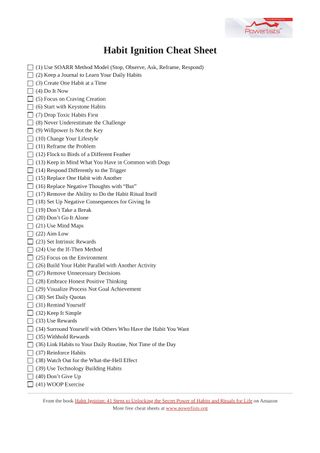
Get the free Habit Ignition cheat sheet
Frequently asked questions
How much exercise do adults need?
The CDC says adults need 150 minutes of moderate-intensity activity a week and at least 2 days of muscle-strengthening activity. The NHS gives the same targets for adults aged 19 to 64.
How do I make exercise a habit if I hate it?
Start with a version so small it feels almost pointless and tie it to something you already do every day. My advice is to choose the least-hated option and add time slowly.
How long does it take to make exercise a habit?
In one study the average time to feel automatic was 66 days, with a range from 18 to 254. Exercise is more demanding than a simple action, so expect it to sit toward the slower end.
Should I talk to a doctor before I start?
The NHS says to speak to your GP first if you have not exercised for some time, or if you have a medical condition or concerns about exercising.