No. A dopamine detox does not reset your dopamine, and the name is not a scientific one. What it can do, when it works, is get you to look at one habit and change it. This is general information, not medical advice. Below: what dopamine does, what the sources say about detoxes, and a simpler way to cut a habit you want gone. The steps at the end are my advice.
What is a dopamine detox supposed to do?
The idea, as it spread online, is to cut out everything stimulating for a day or longer (phone, social media, snacks, music) so your brain “resets” and ordinary things feel rewarding again. People try it because scrolling or snacking feels out of control.
The feeling is real. The explanation is where it goes wrong.
What does dopamine actually do?
Harvard Health describes dopamine as “most notably involved in helping us feel pleasure as part of the brain’s reward system.” It also plays a role in learning, attention, mood, movement, sleep and pain processing, and it is involved in reinforcement, which is why once we enjoy something we want it again (Harvard Health Publishing).
Dopamine is not a toxin to flush out. You cannot detox from something your body needs to move, sleep and feel anything at all.
Do the experts say it works?
Cleveland Clinic is blunt: “There is no such thing as a true dopamine detox. And that’s a good thing! We need dopamine to live.” A psychologist it quotes says the term “describes something that isn’t humanly possible.” The article calls the idea “a scientifically inaccurate rebranding” of cognitive behavioural therapy (CBT), and says the man who coined the term in 2019 admitted it was “just a catchy title” (Cleveland Clinic, 9-Sep-24).
So the evidence is not about resetting dopamine. It is about habits and the triggers that set them off.
What is the useful part?
Strip away the name and there is a sound idea inside: look at the one or two behaviours that bother you. Cleveland Clinic’s advice, drawn from CBT, is to:
- focus on “one or two problematic behaviors at a time” rather than cutting out everything
- set a limit first, such as a daily time cap, if stopping completely feels too much
- swap the habit for another pleasant one, such as a walk instead of scrolling
- notice and write down the triggers that make you want to do it
- see a therapist, addiction counsellor or support group if it is a true addiction
That is habit change, which is more ordinary and more dependable than a reset. If your trouble is the phone, see How to Stop Doomscrolling.
Can too little dopamine cause problems?
Yes, in medical conditions, which is a different matter from a fasting challenge. Harvard Health says too little dopamine causes the stiff movements of Parkinson’s disease, and that “a dopamine deficiency also contributes to a down mood.” It notes that depression is more often linked to serotonin. It adds that people with depression often lack motivation and concentration. On the other side, it describes the “intense feeling of reward” some drugs produce as a route to addiction (Harvard Health Publishing). Those are conditions a doctor diagnoses and treats. If you suspect any of them, a day without your phone is no stand-in for care, which is why the doctor section below matters.
What are four steps to try instead?
These are my advice, built on the advice above.
- Name one habit. Not “my phone.” Something like “scrolling in bed.”
- Find the trigger. For a week, jot down what happens just before: boredom, a notification, the sofa, a bad email.
- Change the cue or the swap. Charge the phone in another room, or put a book where it used to be. Make the habit harder and the replacement easier.
- Keep the rest of your life. You do not need to give up music, friends or food you enjoy. A day of misery is not a method.
If it slips, restart at step one. Discipline or Motivation: How Do You Build Discipline From Zero? covers what to do after a bad week.
When should you see a doctor?
If a habit is causing real harm to your sleep, work, money or relationships, or you cannot cut it down despite trying, talk to a doctor or a therapist. Do not try to treat anxiety, low mood or addiction with a fasting challenge.
Want more?
Habit Ignition: 41 Steps to Unlocking the Secret Power of Habits and Rituals for Life

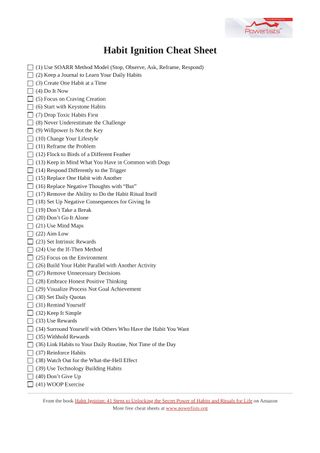
Get the free Habit Ignition cheat sheet
Frequently asked questions
Does a dopamine detox work?
No. It does not reset your dopamine, and the name is not a scientific one. Cleveland Clinic says there is no such thing as a true dopamine detox.
What does dopamine do?
Harvard Health describes it as most notably involved in helping us feel pleasure as part of the brain's reward system. It also plays a role in learning, attention, mood, movement, sleep and pain processing.
What can I do instead of a dopamine detox?
Focus on one or two problem behaviours at a time, set a limit such as a daily time cap, swap the habit for another pleasant one, and write down the triggers.
When should I see a doctor?
If a habit is causing real harm to your sleep, work, money or relationships, or you cannot cut it down despite trying, talk to a doctor or a therapist.
Can low dopamine cause depression?
Harvard Health says a dopamine deficiency contributes to a down mood, though depression is more often tied to serotonin, and that too little dopamine causes the stiff movements of Parkinson's disease. These are conditions for a doctor to diagnose, not something to treat with a detox.