To stop doomscrolling, treat it as a habit, not a character flaw. Find what sets it off, make the phone harder to pick up in those moments, and put a different small action in the same slot. Below: what the term means, what one trial of phone nudges found, and six steps. The steps are my advice. They are not a treatment, and they are built on habit research, not on a test of doomscrolling itself.
What is doomscrolling?
Nuffield Health defines it this way: “Doomscrolling is when we actively seek out distressing or negative material online” (Nuffield Health, updated 3-Sep-26). Many people also use the word for scrolling short videos with no purpose at all. The research is young. A 2025 paper on adolescents says plainly that doomscrolling “has not yet been sufficiently studied” (PubMed 40380779). So be wary of anyone who sounds certain about it.
Does anything reduce phone use?
One randomized trial gives a hint. Jay Olson and colleagues gave people ten simple strategies, such as turning off non-essential notifications and switching the screen to grayscale. Participants chose which to follow for two to six weeks. In the second study, 70 people were compared with a group that only monitored screen time. The nudge group had less problematic phone use and less screen time, and slept better (Olson and others, International Journal of Mental Health and Addiction, 17-May-22). The researchers’ news release put the drop at about an hour a day (EurekAlert, 19-May-22).
The samples were small, and the trial measured phone use in general, not doomscrolling. Take it as a reason to try simple changes, not as proof.
What are six steps to stop?
- Notice the cue. For a week, write down what you were doing, or feeling, just before you picked up the phone. Boredom, a pause in work and bedtime are common ones.
- Switch off non-essential notifications. One of the ten nudges in the trial. Fewer buzzes means fewer cues.
- Add friction. Log out of the app, move it off the first screen, or turn the display to grayscale, another nudge from the trial.
- Give the cue a new routine. If the cue is a pause in the evening, decide in advance what happens instead: a short walk, a page of a book, a glass of water. Lally, who studies habit formation, says that a clear plan of when and where you will do something makes you more likely to do it than a vague intention (University of Surrey, 21-Jan-26).
- Set a window for news. Nuffield Health suggests choosing set times to check news and social media, and keeping the phone out of reach the rest of the time.
- Keep the phone out of the bedroom. It was one of the strategies the news release named for the trial.
Does it matter when you scroll?
It can. The NHS page on insomnia says not to watch television or use devices such as smartphones right before bed, because the blue light makes you more alert. It also suggests relaxing for at least an hour before bed, with a bath or a book, and keeping the bedroom dark and quiet (NHS, insomnia, reviewed 19-Mar-24). That page is about sleep in general, not doomscrolling, so it does not say that bad news in particular keeps you awake. But if your scrolling happens in bed, step 6 and the NHS advice point the same way: put the phone down well before lights out and give yourself a different last hour. A book, a bath or a stretch in the same slot works as the new routine from step 4. If trouble sleeping lasts for months, the NHS says to see a GP.
What if you slip?
Expect to. In the best-known habit study, one missed day made little difference to later progress. If scrolling leaves you anxious or low for weeks, or gets in the way of sleep, work or relationships, talk to your doctor. Habit tips are not a substitute for that.
What next?
If you start and stop within days, read Why Do I Start Strong and Quit After a Week?. For why feedback keeps a habit going, see Want to Create or Break Habits? Focus on Feedback Loops. If you have heard that a “dopamine detox” is the fix, see Does a Dopamine Detox Actually Work?.
Want more?
Habit Ignition: 41 Steps to Unlocking the Secret Power of Habits and Rituals for Life

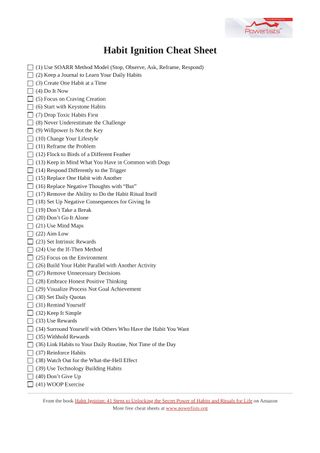
Get the free Habit Ignition cheat sheet
Frequently asked questions
What is doomscrolling?
Nuffield Health defines it as actively seeking out distressing or negative material online. Many people also use the word for scrolling short videos with no purpose at all.
Does anything reduce phone use?
One randomized trial gave people ten simple strategies, such as turning off non-essential notifications and switching the screen to grayscale. The nudge group had less problematic phone use and less screen time. The samples were small, so treat it as a reason to try, not proof.
What are the steps to stop doomscrolling?
Notice the cue, switch off non-essential notifications, add friction, give the cue a new routine, set a window for news, and keep the phone out of the bedroom. The steps are my advice, built on habit research.
What if I slip?
Expect to. In the best-known habit study, one missed day made little difference to later progress. If scrolling leaves you anxious or low for weeks, talk to your doctor.
Is it bad to scroll in bed?
The NHS says not to use devices such as smartphones right before going to bed, because the blue light makes you more alert. The page is about sleep in general, not doomscrolling in particular.