There is no official number. The US National Heart, Lung, and Blood Institute explains what deep sleep is, but it does not say how much a person needs. And the American Academy of Sleep Medicine says consumer sleep trackers cannot be used to diagnose or treat sleep disorders. So a score from your watch or ring is a rough guide at best. This is general information, not medical advice. Below: what deep sleep is, how it changes as you get older, and how to use a tracker without letting it worry you.
What is deep sleep?
Sleep moves between non-REM and REM sleep. Non-REM has three stages, and stage 3 is deep sleep, also called slow-wave sleep. It occurs mostly early in the night. REM sleep is when your eyes twitch and your brain is active, and dreaming usually happens there. REM occurs more often later in the night (NHLBI, Stages of sleep, updated 24-Mar-22).
Each cycle lasts about 80 to 100 minutes, and you usually have four to six cycles a night, according to the same page. That is why cutting your night short, getting to bed very late or waking early can cost you more of the stages that sit in the morning hours.
How much deep sleep do you need?
The NHLBI does not give a target for deep sleep. What the official sources do give is the amount of total sleep: the CDC lists 7 or more hours a night for adults aged 18 to 60, 7 to 9 hours for ages 61 to 64, and 7 to 8 hours for 65 and over (CDC, About sleep, reviewed 15-May-24). Our post on how much sleep adults need goes through those numbers.
My advice: aim at the total hours and a steady routine, not at a deep sleep percentage. If you give your body enough time in bed, the stages tend to look after themselves.
Does deep sleep change with age?
Yes. The NHLBI says slow-wave sleep peaks in early childhood, drops sharply in the teenage years and keeps declining in adulthood. Some older adults may have no slow-wave sleep at all. Newborns spend more time in REM sleep. So if you are 55 and your deep sleep is lower than it was at 20, that is a normal pattern, not proof that something is wrong.
Can you trust your sleep tracker?
Only up to a point. The American Academy of Sleep Medicine published a position statement on consumer sleep technology in 2018. It concludes that these devices are not yet validated or cleared by the FDA, so they “cannot be utilized for the diagnosis and/or treatment of sleep disorders at this time.” It adds that they may be used to enhance the conversation between patient and clinician within a proper clinical evaluation (AASM position statement, J Clin Sleep Med, 15-May-18). The authors call for future validation, access to raw data and algorithms, and FDA oversight. That statement is from 2018, so check the AASM site for newer guidance.
My advice on using a tracker:
- Look at the trend, not the night. One low reading means little.
- Do not chase a deep sleep number. Trackers estimate the stages, and the AASM says they are not validated for diagnosis.
- Notice how you feel. If you wake rested and function well, a bad score is not a problem.
- Take it off the night stand if it makes you anxious. Worry about sleep can itself keep you awake. Our post on how to stop racing thoughts at night has the NHS tips for that.
When should you see a doctor?
See a doctor if you feel unrefreshed for weeks despite enough time in bed, if you are very sleepy in the day, or if a partner sees you stop breathing or gasp in your sleep. A tracker cannot sort that out for you. Take the data along if you like, as the AASM suggests, and let the clinician decide what it means.
Want more?
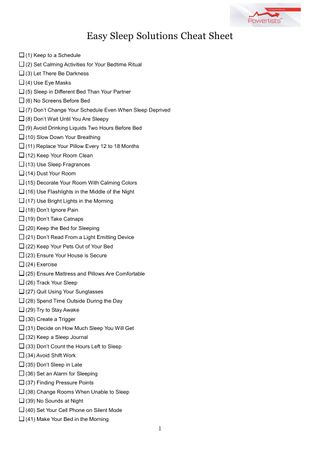
The book has 74 tips for better sleep health, and the free cheat sheet gives you the short version. If you want the basics first, read what sleep is.
Easy Sleep Solutions: 74 Best Tips for Better Sleep Health

Get the free Easy Sleep Solutions cheat sheet
Frequently asked questions
How much deep sleep do you need?
There is no official number. The NHLBI explains what deep sleep is but gives no target, so aim at total hours and a steady routine instead.
Does deep sleep decrease with age?
Yes. The NHLBI says slow-wave sleep peaks in early childhood, drops sharply in the teenage years and keeps declining in adulthood.
Can you trust your sleep tracker?
Only up to a point. The American Academy of Sleep Medicine says consumer sleep trackers cannot be used to diagnose or treat sleep disorders, so treat the numbers as a rough guide.
When should you see a doctor about your sleep?
See a doctor if you feel unrefreshed for weeks despite enough time in bed, are very sleepy in the day, or a partner sees you stop breathing or gasp in your sleep.