This post contains affiliate links. If you buy through one, Urgesta AS may earn a commission at no extra cost to you. Read more.

Use the rule of threes: if you lie awake for at least 30 minutes a night, at least three nights a week, for at least 30 days, it is time to see your doctor. Anything less is usually an ordinary sleep disturbance. It is general information, not medical advice.
When is a sleep problem normal, and when is it a problem?
Everyone has trouble sleeping from time to time. You take an hour to fall asleep, wake in the middle of the night for no reason, spend another hour getting back to sleep and repeat it until morning. What counts as normal varies from person to person, so the useful question is whether you should get help.
Dr Shelby Harris, a sleep specialist at the Sleep-Wake Disorders Center at Montefiore Medical Center, uses the rule of threes: consult your doctor if the problem happens at least three times a week, with at least 30 minutes awake at night, and continues for at least 30 days (HuffPost, Dr Shelby Harris, 2015).
What is the rule of three?
Three things to check:
- Three or more nights a week
- At least 30 minutes awake at night
- For at least 30 days
If all three are true, speak to your doctor or health care provider. This is a rule of thumb from one specialist, not a diagnosis. The NHS gives similar advice in plain terms: see a GP if changing your sleeping habits has not helped, if you have had trouble sleeping for months, or if it is hard to cope during the day (NHS: insomnia, reviewed 19-Mar-24). The CDC says to talk to a healthcare provider if you regularly have problems sleeping (CDC: About Sleep, 15-May-24).
What can you try first?
Dr Harris suggests eight changes:
- Don’t fall into the sleep extension trap. Going to bed early or sleeping in tends to make it worse.
- Don’t nap. If you must, keep it short and finish before 2 p.m.
- Avoid alcohol, nicotine, fluids, heavy meals and exercise within three hours of bedtime.
- Stop caffeine at least eight hours before bed.
- If you can’t sleep, get up and do something calm in dim light, and go back to bed when you feel drowsy.
- Don’t watch the clock.
- Work on stress, anxiety and depression.
- Keep your bedroom dark, quiet and cool.
I include these among the 74 tips in my book. Sleeping pills are not on the list: the NHS says they are only for a few days or weeks at the most, and I explain why in sleeping pills for insomnia, think again. To see how sleep works, start with what sleep is.
For what the CDC, NHS and AASM say about hours of sleep, see how much sleep do adults need.
What does insomnia look like, and what causes it?
The NHS says you may have insomnia if you regularly struggle to fall asleep, wake several times in the night, lie awake, wake early and cannot get back to sleep, or feel tired and irritable in the day. It calls insomnia short-term if it lasts less than 3 months, and long-term if it lasts 3 months or longer. Causes it lists include stress, anxiety or depression, noise, a room that is too hot or cold, alcohol, caffeine, nicotine, jet lag and shift work (NHS: insomnia and causes of insomnia, reviewed 19-Mar-24).
What else does the NHS suggest?
The NHS says a GP may offer cognitive behavioural therapy, face to face or as an online self-help programme. It says to avoid smoking, alcohol, tea and coffee for at least 6 hours before bed, and exercise within 4 hours of bed (NHS: insomnia treatment, reviewed 19-Mar-24). Talk to your doctor before you change any medicine.
If a partner’s snoring is what keeps you up, read how to sleep next to a snoring partner.
What will a doctor do about it?
The NHS says a GP will try to find out what is causing your insomnia so you get the right treatment. That may be cognitive behavioural therapy, a referral to a sleep clinic if you have symptoms of another sleep disorder such as sleep apnoea, and only in limited cases sleeping pills, because GPs now rarely prescribe them for insomnia (NHS: insomnia, reviewed 19-Mar-24). Going to the appointment does not mean you will be given pills.
Want more?
Easy Sleep Solutions: 74 Best Tips for Better Sleep Health

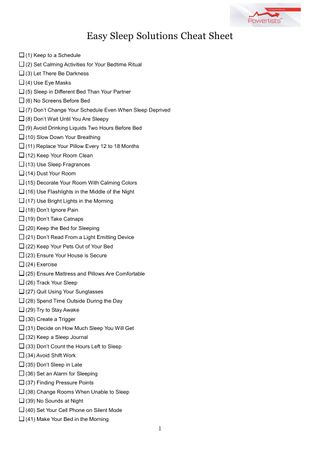
Get the free Easy Sleep Solutions cheat sheet
Photo by: Mesbah Uddin Khan
Frequently asked questions
Is waking up once in the night a sleep problem?
Not by itself. Waking sometimes is common. The rule of threes looks for a pattern: at least 30 minutes awake, three or more nights a week, for 30 days or more.
Should I see a doctor even if I do not meet all three?
Yes, if it bothers you. The NHS says to see a GP if changing your habits has not helped or you cannot cope in the day, and the CDC says to talk to a provider if you regularly have problems sleeping.
Do I need sleeping pills for a sleep problem?
Usually not as a first step. The NHS says GPs rarely prescribe them and only for a few days or weeks. I cover why here.
What will a doctor do about a sleep problem?
The NHS says a GP will look for the cause, may offer cognitive behavioural therapy, may refer you to a sleep clinic if another sleep disorder is suspected, and rarely prescribes sleeping pills.