The way to survive a long road trip with young kids is to plan for the youngest child, make shorter legs with planned stops, and keep what you need within reach. This is advice from me, not from a study.
How do you plan the drive?
(1) Plan for the youngest child
Work out the day around their sleep and meals, not around the map. If the youngest naps at one o’clock, drive through the nap. If they wake up grumpy, plan a stop for then.
(2) Break the trip into short legs
A long drive is easier as several short ones. Pick the stops before you leave: a park, a playground, a picnic place. A place to run gives the kids something to look forward to. Leave extra time for the stops.
(3) Stop earlier than you need to
A calm stop is faster than a long cry in the back seat. If a child is upset, find the next safe place to pull over, take the child out, and let everyone move for a few minutes. I would rather add twenty minutes to the day than lose the mood for the rest of it.
What do you pack within reach?
(4) A front-seat bag
Put snacks, water, wipes, a spare change of clothes, a bag for rubbish and a bag for motion sickness within reach of the person in the front. Do not make a long stop to look for the wipes.
(5) One small surprise per leg
Wrap a few cheap things: a sticker book, a new colouring pad, a small toy. Hand one over at the start of each leg. It gives the child something to look forward to, and it costs little.
(6) Audio and games before screens
Audio stories, music the whole car can sing to, and games like “I spy” work for many ages. If a screen is what saves the day, use it. I would not make a long drive a test of your principles.
What about car seats?
(7) Make sure the seat suits the child
The rules differ by country. On gov.uk, children must normally use a child car seat until they are 12 or 135 cm tall, whichever comes first, and they must use a rear-facing seat until they are over 15 months old (GOV.UK, child car seats: the rules). If you live outside the UK, check your own government’s rules. Whatever the rule, follow your car seat’s own instructions.
(8) Do not rent or borrow a seat without checking it
If you rent a car or borrow a seat, check that it fits the child, the car and the seat’s instructions before you leave the driveway. A seat that is not set up right is not much use. That one is my advice.
What do US safety guidelines add?
For US readers, the CDC’s child passenger safety page (April 2026) sets out the stages in order. Start with a rear-facing seat for as long as the seat’s weight or height limit allows, and never put a rear-facing seat in the front. Move to a forward-facing seat with a harness and top tether, in the back, until at least age 5 or until the child outgrows it. Then use a booster until the seat belt fits, which the CDC says usually happens around ages 9 to 12. It advises keeping children buckled in the back seat until age 13. The page reports that 1,019 child passengers aged 14 and under died in US crashes in 2023, and that 43% of those who died were not buckled up (CDC, child passenger safety).
In the UK, GOV.UK adds that approved seats carry a capital “E” in a circle with “R129” or “ECE R44”, and that front airbags must be switched off before a rear-facing baby seat goes in the front. Check the label on any seat you borrow.
What next?
Flying instead? See How Do You Get a Toddler Through a Long Flight?. For a cheaper trip overall, read How to Travel Cheaply With Kids, and for packing the boot, How Do You Pack Light for a Family Trip?.
Want more?
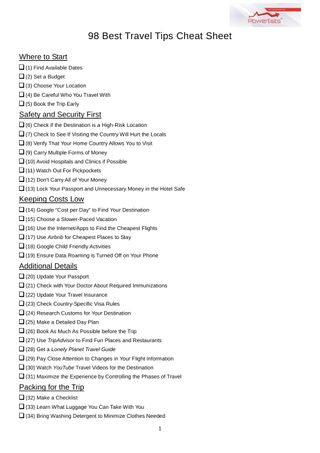
The book has 98 tips, from planning the trip and keeping costs low to packing and heading home. The free cheat sheet gives you the full list of headings to tick off.
98 Best Travel Tips: A Guide for Travel Junkies on a Budget with Kids

Get the free 98 Best Travel Tips cheat sheet
Frequently asked questions
How often should we stop on a long drive with a baby or toddler?
I do not have an official number to give you. My own rule is to stop earlier than you think you need to, and to stop whenever the child is upset, because a calm stop is quicker than a long cry. That is my advice, not a rule.
Do we need a car seat on a road trip?
Yes, the same rules apply as at home. In the UK the rules on gov.uk say children normally need a car seat until they are 12 or 135 cm tall, whichever comes first. In the US, rules differ by state, so check yours.
Can we do a road trip without screens?
You can try. Audio stories, music, car games, a bag of small new things and short stops all help. If a screen saves the day, use it. I would not make the trip a test of willpower.
What is the biggest mistake on a family road trip?
Planning the day for the adults and fitting the kids around it. Plan for the youngest child and the whole trip goes better. That is my advice.
Where should young children sit on a road trip?
The CDC says to keep children buckled in the back seat until age 13, and never to put a rear-facing car seat in the front seat. In the UK, GOV.UK says front airbags must be deactivated before a rear-facing baby seat is fitted in the front.